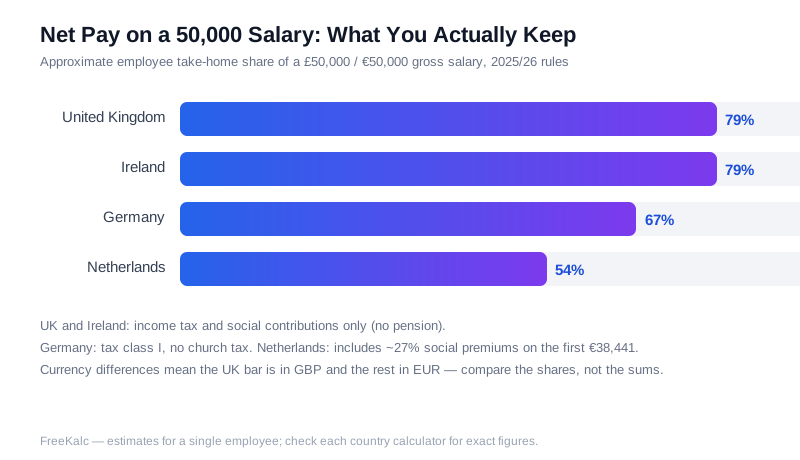
Job ads always quote the gross salary — but rent, groceries and savings are paid from net. The gap between the two is enormous and varies wildly by country, because every nation taxes differently.
Why the differences are so big
UK & Ireland (79%): both use progressive income tax with generous personal allowances and credits, and social contributions are relatively modest. Germany (67%): income tax alone is mild, but employees pay five social insurance pillars (health, care, pension, unemployment) worth ~20% of gross. Netherlands (54%): Box 1 tax hits 36–49.5%, plus ~27% social premiums on the first €38,441 — though the Dutch offset it with generous universal benefits and credits.
The hidden second half of the story
Net salary is not the whole picture: employers in Germany and the Netherlands also pay employer-side contributions of roughly 20–22% on top of gross. And what you get back differs — Dutch and German employees receive gold-standard health coverage inside those deductions, while UK workers pay NHS care via general taxation instead.
Work out your own country
- UK salary calculator — PAYE, National Insurance, student loan
- Irish salary calculator — PAYE, USC, PRSI
- German brutto-netto calculator — Lohnsteuer and social contributions
- Dutch bruto-netto calculator — Box 1 tax and premiums
And if you're comparing offers between countries, don't forget cost of living — rent in Amsterdam or Munich can quietly erase a "higher" net salary. See also our VAT rates guide for the consumer-side picture.