- Put in either figure: net before VAT, or gross with VAT already inside.
- The Irish standard rate of 23% is pre-set — the dropdown and custom box cover the 13.5%, 9% and 4.8% bands.
- You see the net, the VAT and the gross together, calculated on the spot.
- Runs entirely on your own device, so amounts stay private.
- Budget 2026 moved hospitality to 9% in July — use the custom rate until you confirm which band applies.
Home › VAT › Ireland
VAT Calculator Ireland (23%)
Handles Irish VAT both ways: build up a net price with 23% added, or back the VAT out of a gross amount to see what tax you actually paid.
How the Irish VAT calculator works
Irish VAT rates in 2026
Ireland has one of the widest rate schedules in Europe. From 1 July 2026 the second reduced rate of 9% returned for restaurant meals, catering, takeaway food and hairdressing, trimming the 13.5% rate those sectors had paid since 2024.
| Rate | Band | Applies to |
|---|---|---|
| 23% | Standard rate | Most goods and services |
| 13.5% | Reduced rate | Fuel, home heating, repair and maintenance services |
| 9% | Second reduced rate | Restaurants, catering, takeaway food, hairdressing (from 1 July 2026), also gas and electricity |
| 4.8% | Livestock rate | Livestock, greyhounds and some agricultural contracting services |
| 0% | Zero rate | Most food, children’s clothing, books, oral medicines |
Who has to register for Irish VAT
Registration becomes compulsory when annual turnover reaches €85,000 for goods or €42,500 for services. Below those limits, voluntary registration can still make sense for a business whose customers are VAT-registered companies, since it allows reclaiming VAT on start-up costs.
Irish VAT is filed with Revenue through ROS, and returns cover two-month periods rather than calendar quarters, so a typical trader files six VAT returns a year.
Related Irish tax tools: Dutch VAT calculator, VAT rates across Europe, Irish salary calculator.
Embed this calculator
Copy the code below to add this free calculator to your website or blog. No signup, no branding inside the tool.
The embed adapts to your page width and works on any CMS — WordPress, Squarespace, Wix, Ghost, plain HTML.
Browse all embeddable calculators →
Selling into the UK? Our UK VAT registration threshold guide explains when registration becomes compulsory for UK businesses.
Sources: European Commission. Rates last verified October 2026. Estimates only — see our editorial policy.
Frequently asked questions
What is the standard VAT rate in Ireland?
The standard Irish VAT rate is 23%. Reduced rates of 13.5% and 9% apply to goods like fuel, tourism services and newspapers, and some food and children's items are zero-rated or exempt.
How do I remove 23% VAT from a gross price?
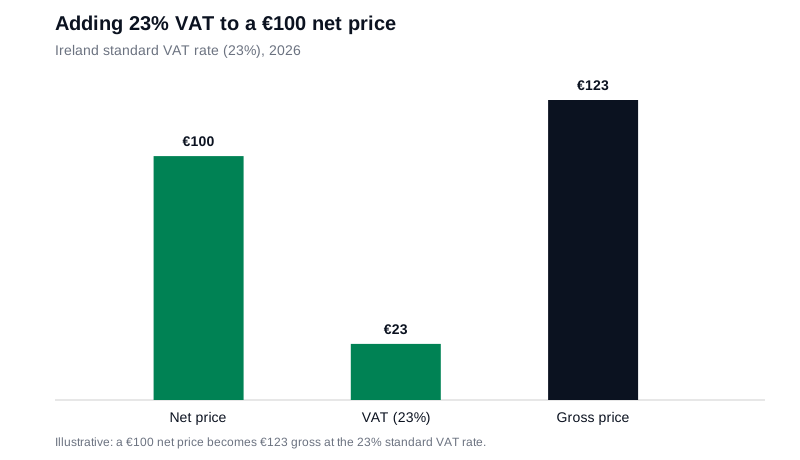
Divide the gross amount by 1.23. For example €123 ÷ 1.23 = €100 net, meaning €23 of VAT was charged.
Do I charge Irish VAT or UK VAT?
Sales of goods to consumers in Ireland from the UK post-Brexit may require Irish VAT registration under IOSS/distance selling rules — check current thresholds with Revenue.
Is this Ireland VAT calculator free?
Yes — free, no signup, no cap on calculations. It starts at the 23% standard rate and the custom box handles every Irish reduced band down to 4.8%.
What is at the 9% VAT rate in Ireland since July 2026?
Restaurant and catering services, takeaway food and hairdressing moved to 9% on 1 July 2026, down from 13.5%. Gas and electricity supplies are also charged at 9% under separate energy measures.
When must an Irish business register for VAT?
Once turnover hits €85,000 for goods or €42,500 for services in a 12-month period. You can register voluntarily before that point if you want to reclaim VAT on costs.
How often are Irish VAT returns filed?
Every two months. Each return, filed through ROS, covers a two-month period, giving six filings a year for a standard trader.
What does the 4.8% rate apply to?
Livestock sales, greyhounds and certain agricultural contracting services. It exists because farming income is otherwise largely VAT-exempt, and the rate keeps trade between farmers and registered traders workable.
Estimates are for guidance only and are based on published 2026 rates. Always confirm with a qualified professional for financial decisions.