£18 an hour after tax at a glance
| Pay period | Gross pay | Take-home pay |
|---|---|---|
| Per year (2,080 hours) | £37,440 | £30,476 |
| Per month | £3,120 | £2,540 |
| Per biweekly paycheck | £1,440 | £1,172 |
| Per week | £720 | £586 |
| Per hour | £18 | £15 |
Where your £37,440 goes: the 2026/27 deductions
| Deduction | Amount per year |
|---|---|
| Gross annual pay (£18 × 2,080 hours) | £37,440 |
| Income tax (after £12,570 personal allowance) | −£4,974 |
| National Insurance (8% / 2%) | −£1,990 |
| Take-home pay | £30,476 |
Scotland has its own income tax bands with lower thresholds — the Scottish income tax calculator shows the exact difference on the same salary.
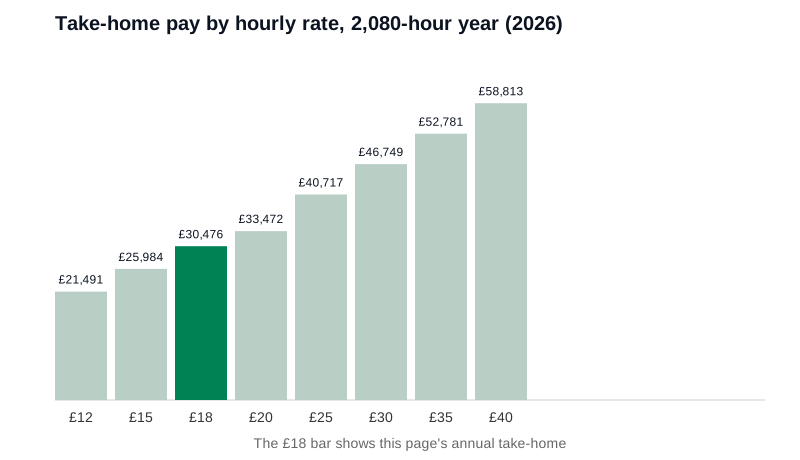
£37,440 gross, £30,476 home: the pay level where planning starts
£18 an hour lifts a full-time salary to £37,440 — comfortably above the UK median for full-time workers. Your deductions total £6,964 for the year, still an effective 19%. What changes at this level is not the tax rate but the decisions the income enables.
The three-hour gap between £15 and £18
Three extra pounds an hour sound modest; across a working year they are worth £6,240 gross and about £4,492 after deductions. That difference alone funds a full year of a serious hobby, a car on finance, or a meaningful monthly savings habit — £374 extra a month. When you weigh two job offers, comparing headline hourly rates is easy, but remember the pension match, holiday entitlement and commute cost before deciding that the higher rate wins.
Your marginal rate: 28p gone, 72p kept
Like all basic-rate earners, you lose 20% income tax and 8% National Insurance from each additional pound. Salary sacrifice schemes — cycle-to-work, extra pension, childcare vouchers through your employer — are especially good value here because they also dodge most of the National Insurance that a cash equivalent would attract.
Weekly rhythm: £586 every Friday
Weekly pay of £586 makes this an easy income to budget with envelopes or standing orders: £100 a week of savings transfers out on payday is 17% of everything you earn, without ever feeling the pinch. Annual leave is worth planning too — your holiday pay is calculated on your average weekly earnings, so a consistent 37.5-hour week protects it.
A pension decision with a real price tag
The standard 5% auto-enrolment contribution costs about £117 a month at this salary. Skipping it returns that money to your payslip — but you also walk away from the employer's 3% and the government's top-up. A middle path exists: many schemes let you set contributions to 1% temporarily, which keeps the account open while you recover from a big move or a deposit.
£18 versus £15: what the raise actually buys
| Measure | £15/h | £18/h | Difference |
|---|---|---|---|
| Gross (2,080 hours) | £31,200 | £37,440 | +£6,240 |
| Monthly take-home | £2,165 | £2,540 | +£375 |
| Effective tax rate | 16.7% | 18.6% | +1.9 pts |
| Weekly savings at 20% rate | £100 | £117 | +£17 |
The last row is the one people miss: because deductions scale gradually, an 18% raise in gross becomes a 17% raise in take-home. You keep almost all of it. Contrast that with crossing £50,270, where three pounds of hourly rate can shrink to £1.74 net — the UK system rewards the climb through the basic band and starts taxing patience above it.
A final note on hourly versus salaried framing: many £18-an-hour roles are advertised as "£37,440 per annum" and vice versa. The two are identical only at exactly 2,080 paid hours. Shift patterns that run 45 weeks with unpaid breaks, or contracts with 35 contracted hours plus optional overtime, can differ by thousands — always price the pattern, not the headline rate, when comparing offers.
More UK hourly rates after tax
- £12 an hour after tax
- £15 an hour after tax
- £20 an hour after tax
- £25 an hour after tax
- £30 an hour after tax
- £35 an hour after tax
- £40 an hour after tax
Related pages
Frequently asked questions
£18 an hour is how much a year after tax UK?
At £18 an hour, a full 2,080-hour year is £37,440 gross and about £30,476 after tax. That is £4,974 of income tax and £1,990 of National Insurance.
How much is £18 an hour a month after tax UK?
£2,540 per month. £18 an hour works out to £30,476 a year after income tax and National Insurance.
How much is £18 an hour a week after tax?
About £586 per week after tax (£1,172 on a biweekly paycheck). These figures assume a standard 40-hour week and 2026/27 rates.
What is £18 an hour per year before taxes?
£37,440 gross per year at £18 an hour, based on 2,080 hours (40 hours a week for 52 weeks). After tax, take-home is about £30,476.
Is £18 an hour good pay in 2026?
£18 an hour is roughly the equivalent of a £37,440 annual salary — £30,476 take-home. Judge it against the UK average salary and your own rent and commuting costs.
Does £18 an hour take-home differ in Scotland?
Yes. Scottish income tax bands kick in earlier — the 42% rate starts at £43,663 compared with 40% at £50,271 elsewhere. Use the Scottish income tax calculator for exact Scottish figures on the same pay.