£25 an hour after tax at a glance
| Pay period | Gross pay | Take-home pay |
|---|---|---|
| Per year (2,080 hours) | £52,000 | £40,717 |
| Per month | £4,333 | £3,393 |
| Per biweekly paycheck | £2,000 | £1,566 |
| Per week | £1,000 | £783 |
| Per hour | £25 | £20 |
Where your £52,000 goes: the 2026/27 deductions
| Deduction | Amount per year |
|---|---|
| Gross annual pay (£25 × 2,080 hours) | £52,000 |
| Income tax (after £12,570 personal allowance) | −£8,232 |
| National Insurance (8% / 2%) | −£3,051 |
| Take-home pay | £40,717 |
Scotland has its own income tax bands with lower thresholds — the Scottish income tax calculator shows the exact difference on the same salary.
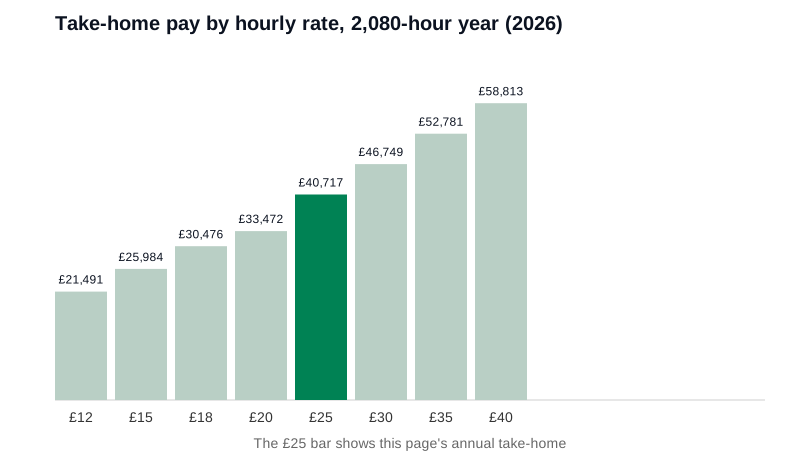
£52,000: welcome to the 40% band — and the 58% corner
At £25 an hour your full-time gross reaches £52,000 — about £1,730 past the £50,270 higher-rate threshold. Take-home of £40,717 means you surrender £11,283 to HMRC across the year, an effective 22% even though your top income is now taxed at 40%.
Your marginal rate just changed twice
Income above £50,270 is taxed at 40% instead of 20%, but employee National Insurance on that same slice drops from 8% to 2% because you are past the upper earnings limit. Net effect: each additional pound earns you 58p instead of 72p — a 42% marginal rate. Any overtime offer or bonus at this level should be judged against that figure, not your old one.
The cheapest way back under the threshold
Sacrificing just £145 a month into your pension drops your taxable income back below £50,270, converts a 42% marginal rate into 40% pension relief, and still leaves £3,393 of monthly take-home to live on. If you receive a bonus late in the tax year, a one-off pension contribution of the same size often keeps you out of the higher band entirely — a trick worth a fifteen-minute conversation with payroll every February.
Where the money goes at £3,393 a month
This income funds a comfortable single life in any regional UK city: a good one-bedroom flat, a reliable car, holidays and a serious savings habit. As a household's second income it changes the arithmetic of childcare versus part-time work entirely. The one cost that still bites is the mortgage cap — lenders will typically offer around 4.5× salary, which is roughly £234,000 before any deposit.
Check your tax code this year
Crossing £50,270 mid-year often triggers an emergency or split code such as 1257L plus a D0 adjustment on your second job or bonus. If your payslip shows an unexpected K code or a D code, expect a reconciliation letter from HMRC — better to catch it in-month than to receive a bill eighteen months later.
Your payslip at £52,000, line by line
Per month, HMRC's share of this salary is about £640 of income tax and £279 of National Insurance, while your net lands at £3,393. Over a full year the tax portion alone (£7,660 of income tax) is larger than the entire personal allowance you are given — a fact worth remembering when someone tells you the UK "barely taxes" people on £50k.
Now the optimistic version: with the £145-a-month pension sacrifice described above, your taxable income settles at £50,240 — just under the threshold. Your net drops by about £84 a month, your pension gains £248 with employer money and relief included, and you exit the higher-rate band entirely. That single payroll form is worth roughly £960 a year of tax difference compared with taking the same £1,730 as cash.
More UK hourly rates after tax
- £12 an hour after tax
- £15 an hour after tax
- £18 an hour after tax
- £20 an hour after tax
- £30 an hour after tax
- £35 an hour after tax
- £40 an hour after tax
Related pages
Frequently asked questions
£25 an hour is how much a year after tax UK?
At £25 an hour, a full 2,080-hour year is £52,000 gross and about £40,717 after tax. That is £8,232 of income tax and £3,051 of National Insurance.
How much is £25 an hour a month after tax UK?
£3,393 per month. £25 an hour works out to £40,717 a year after income tax and National Insurance.
How much is £25 an hour a week after tax?
About £783 per week after tax (£1,566 on a biweekly paycheck). These figures assume a standard 40-hour week and 2026/27 rates.
What is £25 an hour per year before taxes?
£52,000 gross per year at £25 an hour, based on 2,080 hours (40 hours a week for 52 weeks). After tax, take-home is about £40,717.
Is £25 an hour good pay in 2026?
£25 an hour is roughly the equivalent of a £52,000 annual salary — £40,717 take-home. Judge it against the UK average salary and your own rent and commuting costs.
Does £25 an hour take-home differ in Scotland?
Yes. Scottish income tax bands kick in earlier — the 42% rate starts at £43,663 compared with 40% at £50,271 elsewhere. Use the Scottish income tax calculator for exact Scottish figures on the same pay.